for Poliarmonica (accordion + field recordings + pedalboards + computer processing)
Aquae sonantes presents an ongoing research focused on water: its sounds, our relations to those sounds, and the sounds we produce in the vicinity of water. It focuses on radical, relational and ecological listening, and is an homage to this essential element: we are made of water, surrounded by it – yet we so often overlook its presence, draining and polluting this vital entity.
The field recordings have been collected through several residencies and projects, from the watermill Mulino Nicli, the river Piave, the Sardinian island (Italy) to the rains and fountains of Brussels and Marais Wiels (Belgium).
I perform the piece using my expanded instrument, the Poliarmonica, a hybrid of accordion, pedalboards, computer electronics, and field recordings.
Poliarmonica inhabits the space between composition and improvisation, performance and situatedness, fostered by social conscience and activism. It invites and includes the audience in shaping their own listening experience.
The project proposes an artistic research practice that invites participants to listen to the plurality of sounds and voices inhabiting the Piave River. Through shared walks, field recording, oral testimonies, sound mapping, moments of reflection, and musical creation, we will develop an ecological listening practice of the river, understood as a way of engaging with the environmental, social, and cultural complexities of the territory. Interdisciplinary and intergenerational in nature, the project creates opportunities for exchange among local residents, schools, researchers, and experts, with the aim of amplifying diverse perspectives and fostering new ways of imagining the relationship between community, territory, and river.
Il progetto propone una pratica di ricerca artistica che invita ad ascoltare la pluralità di suoni e voci che abitano il fiume Piave. Attraverso cammini condivisi, field recording, testimonianze orali, cartografia sonora, momenti di riflessione e creazione musicale, svilupperemo un ascolto ecologico del fiume, inteso come pratica di relazione con la complessità ambientale, sociale e culturale del territorio. Interdisciplinare e intergenerazionale, il progetto crea occasioni di incontro tra abitanti, scuole, ricercatori ed esperti, con l’obiettivo di amplificare una pluralità di prospettive e far emergere nuove modalità di immaginare il rapporto tra comunità, territorio e fiume.
Il Piave. La Piave, come la sento nominare nel mio dialetto. Presenza silenziosa di tutta la mia vita, attraversata quotidianamente. Ne porto traccia nel cognome, nell’accento che mi caratterizza. Ne ho sempre sentita raccontare una sola versione: quella del fiume sacro alla patria. Eppure, ho sempre pensato che questo fiume scorresse molto prima dei concetti di “sacro” e di “patria”, e che lo abbiamo ridotto ad una storia sola.
Ma quali sono davvero le sue storie, le voci che lo abitano?Prendiamoci il tempo per ascoltarle insieme, registrarle e raccontarle. Ci parla della coesistenza di pietre, animali e piante. Di gocce d’acqua, di alluvioni, di frane. E anche di esseri umani: delle loro storie, nascite e morti, dei lavori, delle guerre. Delle comunità che lo hanno abitato e che lo abitano oggi. Di chi ci vive e lo custodisce. Di chi lo sfrutta e lo inquina.
Per ascoltare tutte queste voci avrò il privilegio di collaborare con esperti di geologia, biologia, idrologia, chimica e ingegneria idraulica; con alcuni studenti delle scuole in sua prossimità; con chi ci lavora quotidianamente; con le comunità che vi abitano; con i musei che ne conservano la memoria e il racconto; con il conservatorio vicino alla sua foce.
Insieme cammineremo lungo la Piave: la ascolteremo, la registreremo e creeremo una cartografia sonora del suo percorso. E poi…la musica. Questa pluralità di storie sarà restituita e raccontata con i suoni della fisarmonica e delle voci registrate lungo il cammino, in forma di sessioni di ascolto collettivo, concerti-conferenza, installazioni sonore, podcast, e un documentario.
A project that holds space for collective ecological listening, meant as a deliberate human act of connecting to a broader environmental and relational system through sound. It will unfold through collective bike rides in Brussels, field recording, sonic cartography, narration, reflection, and collective creation. In collaboration with cycling associations, schools, and cultural centres, the project brings together and amplifies diverse perspectives and ways of knowing, exploring the complexity of urban life through slow and embodied modes of attention. It will generate agreed forms of restitution, including a sonic map, a shared soundscape, and a number of performances.
The bicycle has always been a faithful companion. From my first BMX as a child, to race bikes in my twenties, and later the discovery of bikepacking, my relationship with cycling shifted from a performance-driven practice to a more political and mindful one.
My bike became my primary mode of transport, from daily commutes to holidays. During the pandemic, it turned into a true instrument of freedom, letting me cross borders just to be with the person I love.
In Brussels, I began volunteering as a bike mechanic and trainer for newcomers. I came to embrace the bicycle’s social potential and its pollution-free, silent, human‑scaled vision of mobility—an invitation to rethink how we inhabit and share public space.
Gradually, cycling evolved from a means of moving through the city into a way of experiencing reality itself: while pedalling, I realized that cyclists inhabit a peculiar sonic condition. This auditory experience is shaped by relative speed, proximity to cars, and the wider distances covered compared to walking. The bicycle becomes a technological mediator—an instrument for shaping together a sonic cartography, transforming the journey into an opportunity for ecological, critical, and collective listening.
This project brings together people who experience Brussels by bikes, for commuting, for fun, socially or alone. Those who cycle regardless of weather or problematic infrastructures.
Together, we will collectively listen to our city, exchange, record, map, and transform the city’s soundscape into a shared sonic cartography. Finally, we will make sound art with it together.
Ce projet de recherche artistique crée un espace d’écoute écologique collective, envisagée comme une pratique de connexion, par le son, aux dimensions environnementales, sociales et relationnelles qui façonnent notre expérience du monde. À travers des balades à vélo collectives dans Bruxelles, des enregistrements de terrain, des cartographies sonores, des récits, des moments de réflexion et de création partagée, il invite à porter une attention lente et incarnée aux réalités urbaines. Développé avec des associations cyclistes, des écoles et des centres culturels, il valorise une diversité de voix afin d’explorer la complexité de la ville. Le projet donnera lieu à des formes de restitution co-construites, notamment une carte sonore, un paysage sonore partagé et plusieurs performances.
Le vélo a toujours été un compagnon fidèle. De mon premier BMX enfant aux vélos de course de ma vingtaine, puis à la découverte du bikepacking, ma pratique du cyclisme est progressivement passée d’une logique de performance à une approche plus politique et attentive.
Mon vélo est devenu mon principal moyen de déplacement, pour les trajets du quotidien comme pour les voyages. Pendant la pandémie, il s’est transformé en véritable instrument de liberté, me permettant de traverser les frontières pour rejoindre la personne que j’aime.
À Bruxelles, j’ai commencé à m’engager comme mécanicien et formateur bénévole. J’y ai découvert le potentiel social du vélo, ainsi que sa vision de la mobilité : non polluante, silencieuse et à échelle humaine. Une invitation à repenser notre manière d’habiter la ville et de partager l’espace public.
Peu à peu, le vélo a cessé d’être un simple moyen de traverser la ville pour devenir une manière d’expérimenter le réel. En pédalant, j’ai pris conscience que les cyclistes évoluent dans une condition sonore singulière, façonnée par la vitesse relative, la proximité des voitures et les distances parcourues, plus étendues qu’à pied. Le vélo devient alors un médiateur technologique, un instrument permettant de construire une cartographie sonore partagée et de transformer le déplacement en une opportunité d’écoute écologique, critique et collective.
Ce projet rassemble celleux qui parcourent Bruxelles à vélo : pour se déplacer, pour le plaisir, en groupe ou en solitaire. Celleux qui pédalent malgré la pluie, le vent ou des infrastructures parfois inadéquates.
Ensemble, nous écouterons la ville, enregistrerons ses sons, les cartographierons et partagerons nos expériences. À partir de cette matière partagée, nous créerons également des œuvres sonores collectives.
Palhaço is my current project for solo acoustic accordion, and also the title of one of my solo albums available at this link.
In this album, I gently portray the two souls of a clown: a spontaneous, playful inclination toward laughter, counterpointed by a melancholic reflection on life.
Each piece is preceded by an introduction in which I share my insights into the works, as well as into the soul of the accordion and its creative possibilities.
“Remarkable accordionist Luca Piovesan, with an amazing solo program. Piovesan played excitingly. The piece was extremely predatory and Piovesan should receive the congratulations of having the full control in this maddening scenario.” (No.14plusminus – Romania)
“Luca Piovesan plays exceedingly well. This recording is one of those which should be made available in music libraries around the world for composers and accordionists to hear and study, performed by an excellent accordionist.” (accordions.com)
“Luca Piovesan and his accordion, what an enchanting breathe” (Suonare News)
“Luca Piovesan, surprisingly talented accordionist, brings the expressive threshold of the accordion beyond our imagination. Thanks to the courageous and aware musical art of Luca Piovesan, what a free and sensitive performer.” (Il Gazzettino)
Calls in the wind (Avian cartographies of ecological change) is a collaborative sound‑art project developed in dialogue with biologist and birdsong expert Fabio Cherchi, in collaboration with local musicians, schools and institutions. Through kayak‑based field recording, collective listening, and sound creation, the project is a testimony of coastal soundscapes and birdsongs of Sardinia. The collected material is transformed into a shared sound work, presented through live performances integrating field recordings and collective creation with the Poliarmonica.
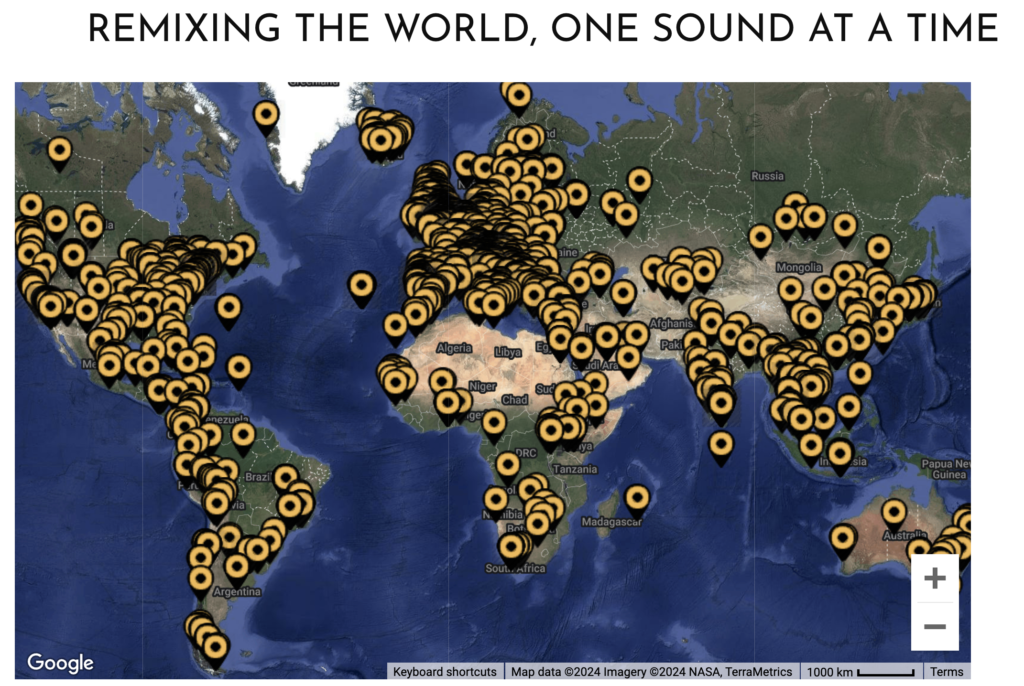
Migration Sounds is a collection of the sounds of human migration, in partnership with Oxford University’s Centre on Migration, Policy and Society (COMPAS). The database contains 120 sounds from 51 countries – and the personal stories behind them – and we (a group of sound artists) used sound to help reframe the conversation around human migration and present valuable new perspectives on the issue.
For each field recording you can listen to the original version and the one reimagined by the sound artist. My personal contribution is “Natasha’s borscht”, in a sort of “Kitchen remix”, where I am imagining the kitchen as a universal meeting and sharing space, inspired by the intimate recording of Natasha and Maria. Shared cooking is when distant worlds become close, when family trees and traditions remix and meet in front of a sink and a pan: recipes become a space for stories.
I decided to use only some relevant spoken exchanges, a lot of noises and textures of the cooking process, and Natasha’s contagious laughter. I only used cut and paste, a lot of layering, panning, and a bit of reverb, to remix this kitchen story and immerse the listener into this space of possibilities.
Feel free to scroll through the database, be inspired by it, and reflect upon its theme!
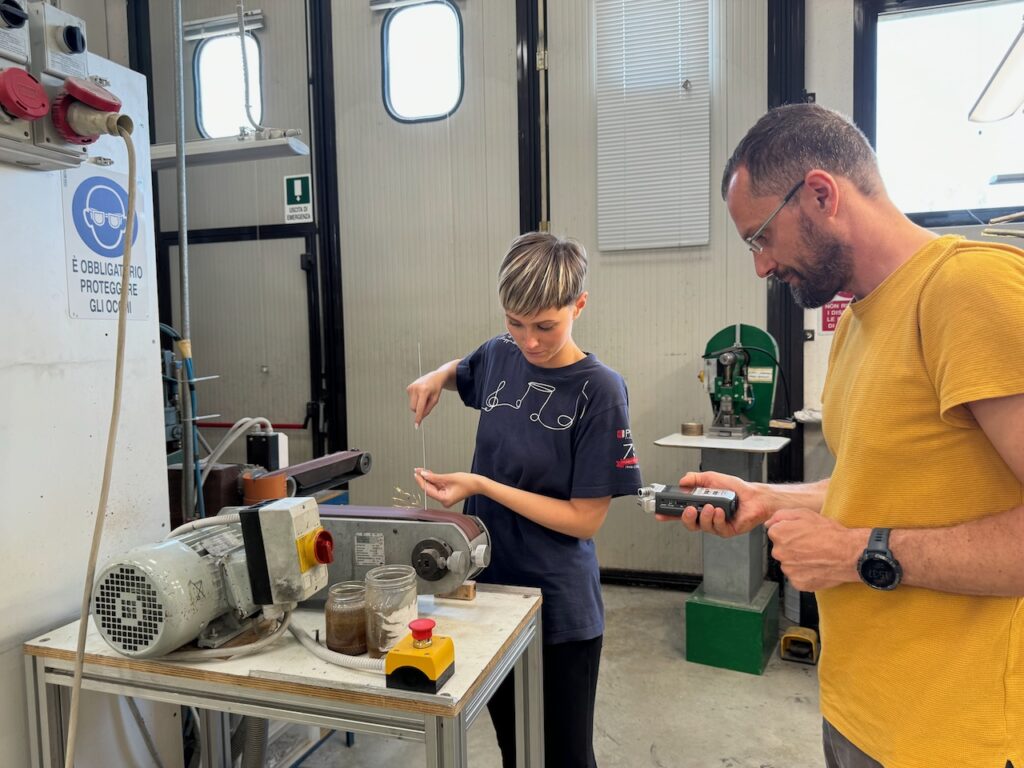
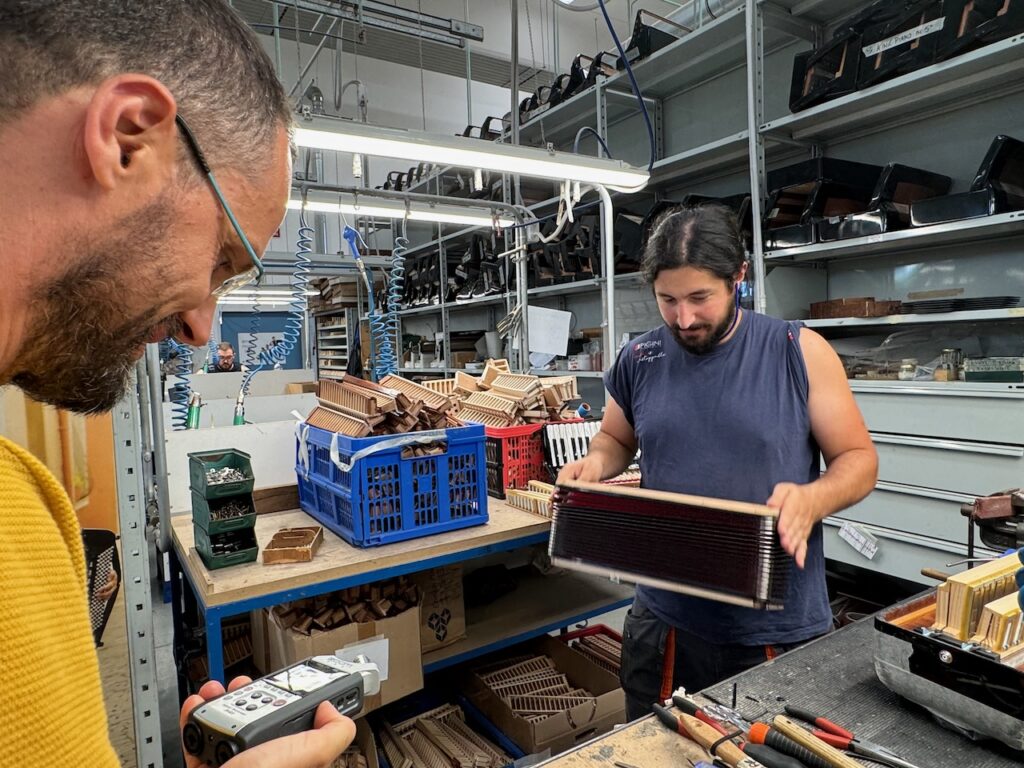
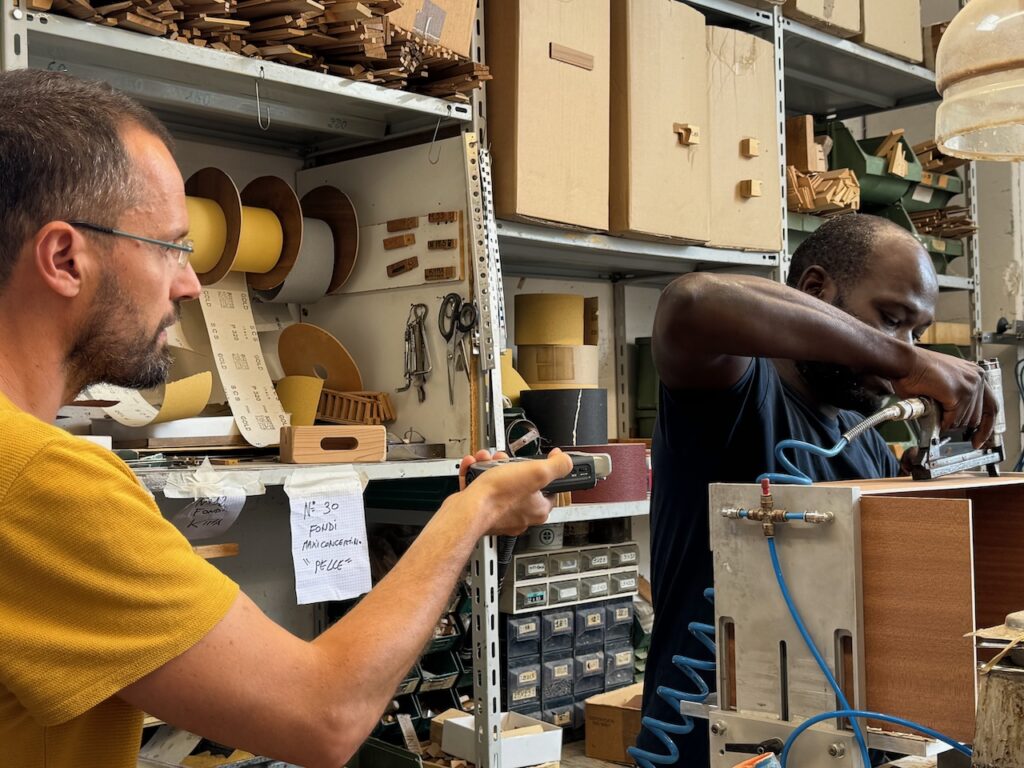
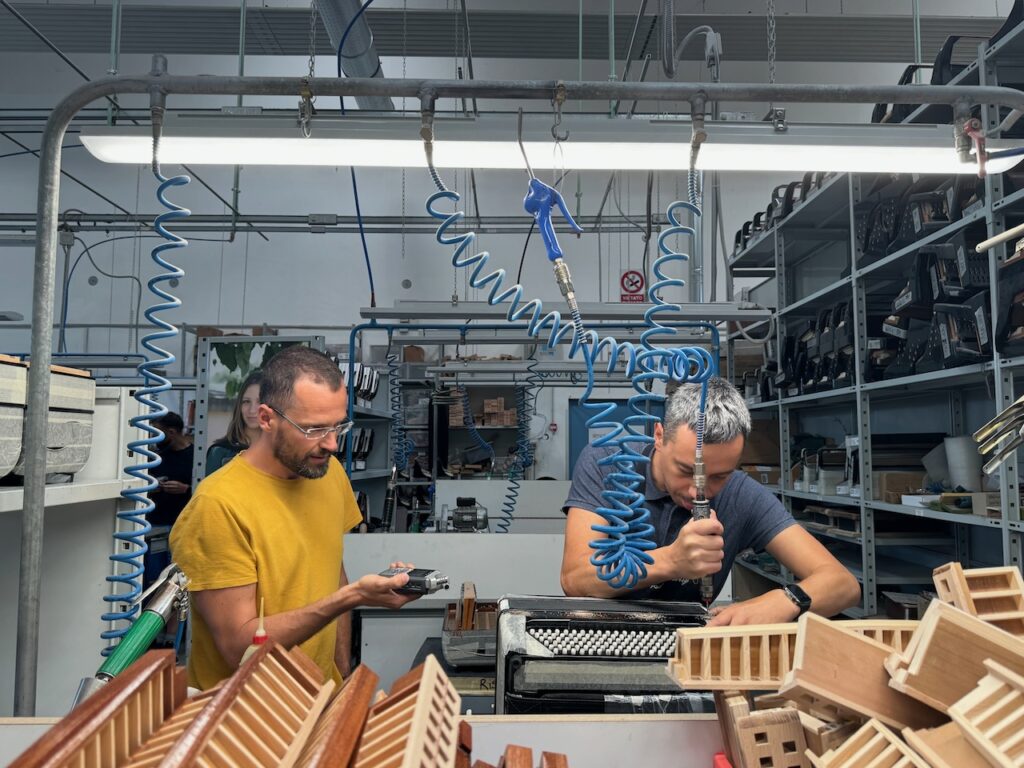
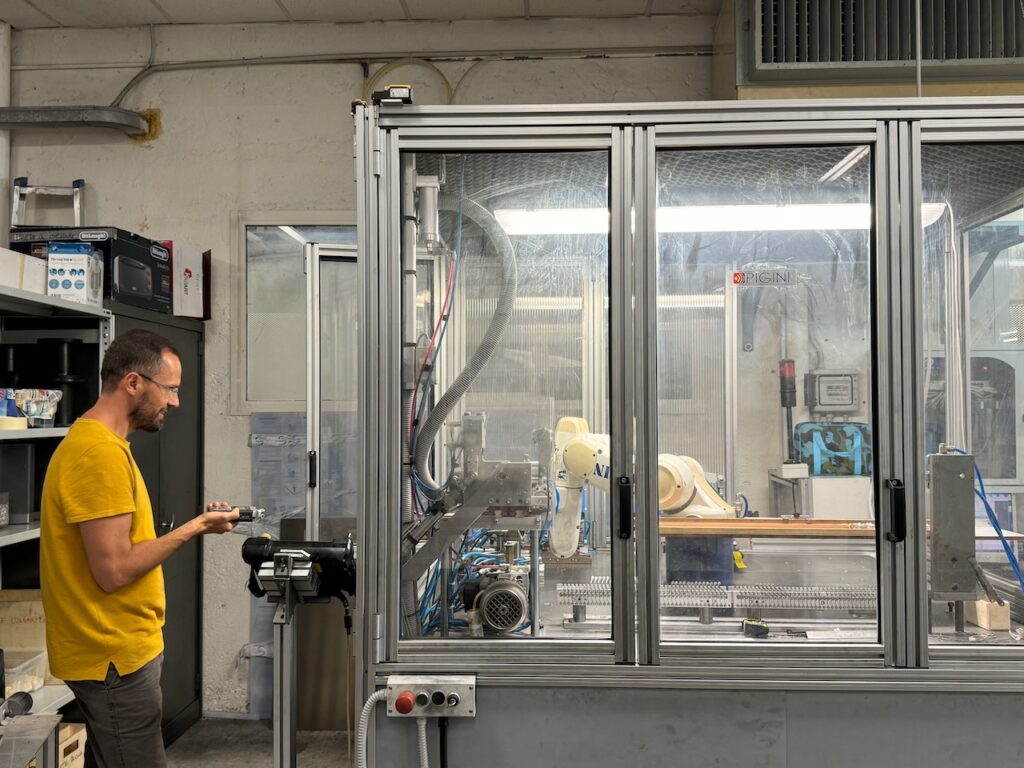
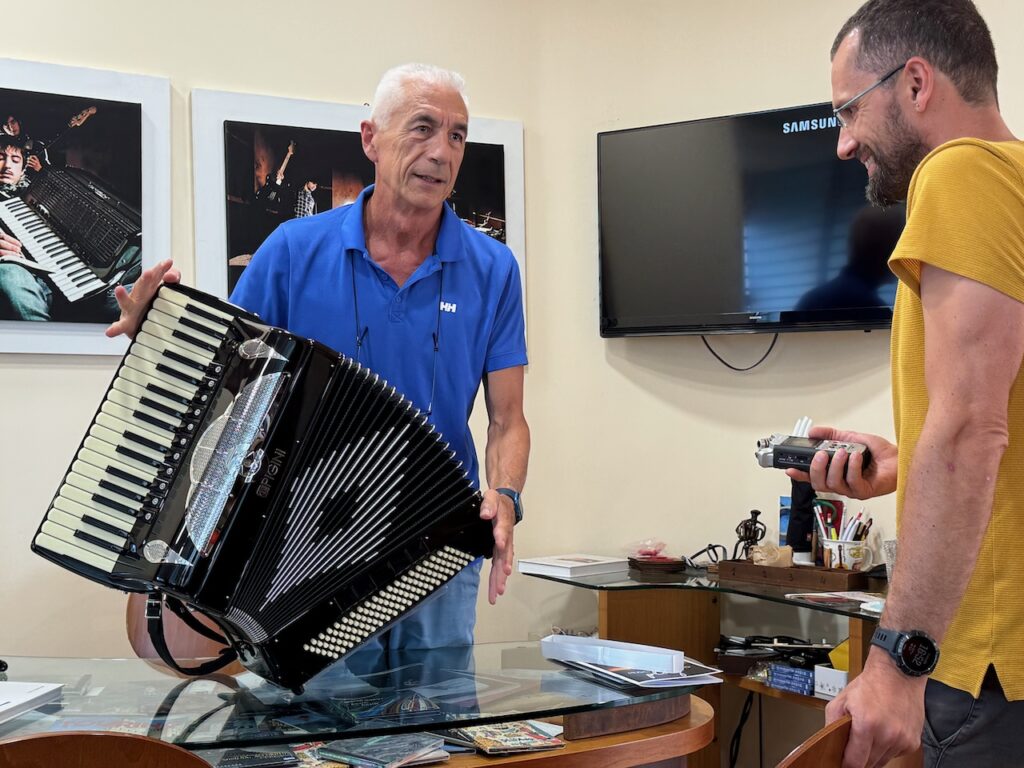
Last week I lived an extraordinary experience: I was able to spend some days at Pigini accordions factory, in Casterlfidardo (Italy) and share some time with the workers. I interviewed them about the sounds they are surrounded by and their relationship with them, and I incorporated these dialogues and sounds using my “Poliarmonica”, a hybrid instrument that includes a Pigini accordion, pedalboards, and computer processing. I could encompass the voices, the saws, the planers, the tuning machines, the robotic arms and compressors and they became musical instruments that participated in this concert as protagonists, revealing unexpected connections with the sound of the accordions they help to build. My restitution was a concert on the last day of the residency, for the workers and their families. Thanks to all Pigini family for this heartwarming experience: Francesca, Massimo, Federico and Riccardo, and to all the workers I had the luck to exchange words and experiences.
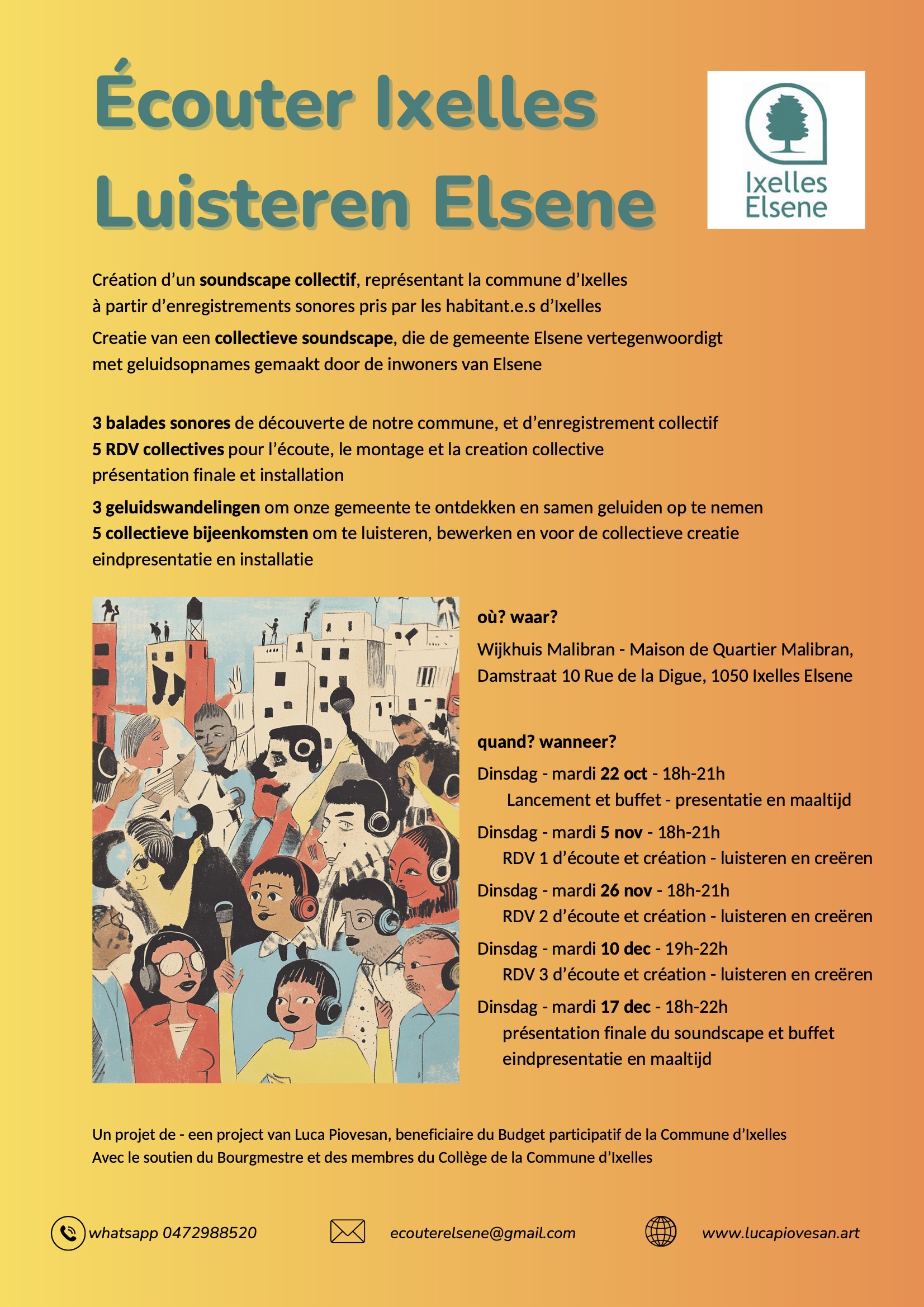
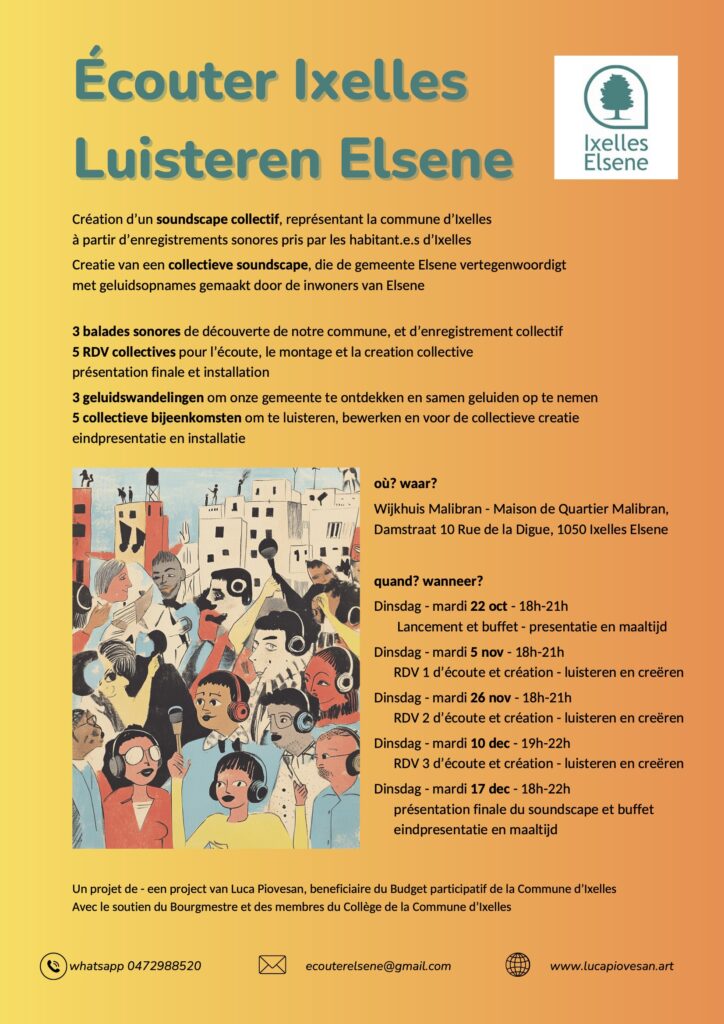
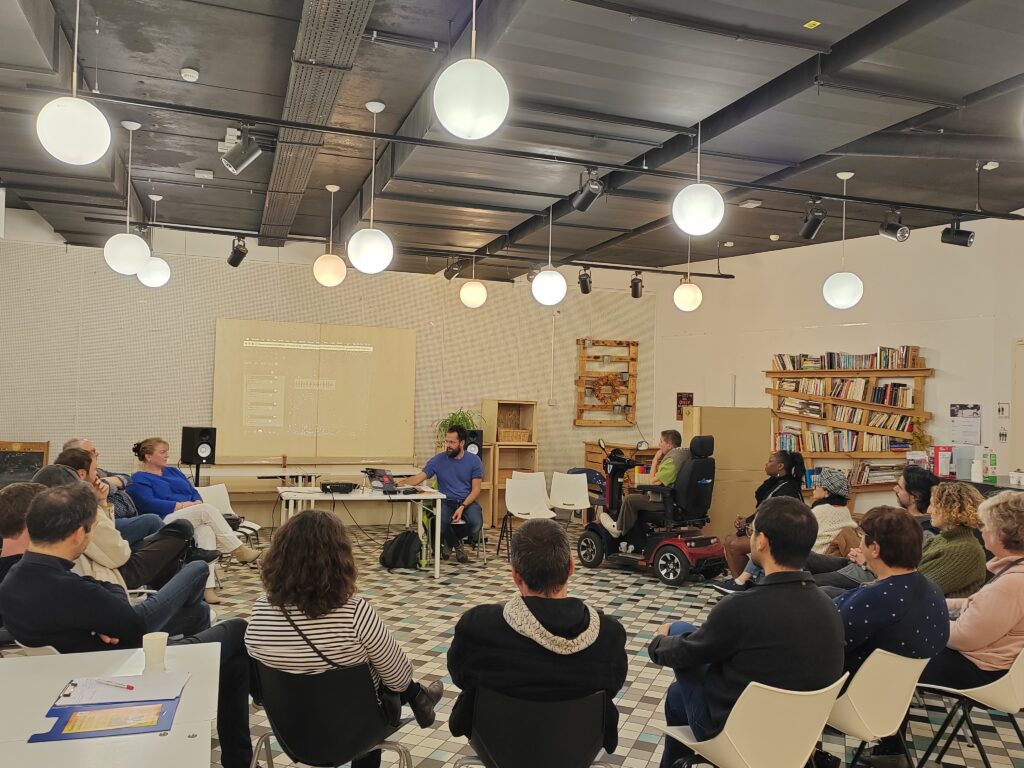
Écouter Ixelles – Luisteren Elsene (Winter 2024) My project “Écouter Ixelles – Luisteren Elsene” (“Listen to Ixelles”), has been selected in the context of the “Budget Participatif 2024” of Ixelles city. The project aims to encourage social cohesion and living together, with the tools of listening and collective creation.
We shared recording sessions during three sound-walks exploring the commune, and we worked together during five sessions in order to create a collective soundscape of the city. We shared listening sessions, creative decisions and the editing and mixing process.
Here the three collective soundscape we produced:
thanks to all the participants, your presence has been heartwarming: Alexandre Montandon, Arielle Goldschlager, Bruna Esperi, Camille Somers, Céline Rustin, Claudio Porru, Diana Duta, Edgar Van Den Bogaerde, Iola di Cara, Jade Lam, La bulle, Marie-France Maxime, Martine Nicolas, Martine Vandaele, Nicola Lancerotti, Nicolò Triacca, Nuno Cernadas, Piergiorgo Pirro, Quentin Massot, Sabin Bertrand, Thibaut Leu-Cauvin, Véronique Van den Kerckhove, Violeta Ricoy Roig, Yann Vivane.
Forêt nom féminin (2021) is a piece in six movements inspired by the homonymous book by Jérôme de Vienne, published by ISTI MIRANT STELLA in 2021 and the website foretnomfeminin.hotglue.me, an ongoing conversation between Diana Duta and Jérôme de Vienne about translation, the infinite permutations of language, a less-than-human word, an errant narrative of many voices, above all a labyrinthine and obscure research method. The process, following the six scores found on the website, is based on the collection of different elements and fragments (through field recording) and their recombination (through editing and mixing) in order to build a sense of landscape and a narrative which traverses it from within. (click on the image below to go to the playlist)
ALTERITÀ (2020) – Bruna Esperi [Cultural Manager • Community Mediator] + Luca Piovesan [Musician • Researcher • Producer] un progetto per “Ti do la mia parola” curated by Butik.
Una quotidianità rubata, incastrata nella morsa dell’imprevedibilità. Suoni e rumori che popolano una nuova essenza dell’esistere intersecandosi con le parole. Un dialogo che porta alla luce la vulnerabilità, le affinità e le prospettive che culminano inuna armonia plurale tra due alterità sullo sfondo della città diffusa Rotterdam-Bruxelles. È così che Bruna Esperi e Luca Piovesan interpretano il Lockdown sotto il segno della parola “Alterità”.
Together with Maarten Stragier (a trusted partner in our duo Promenade Sauvage) at the electric guitar, I was commissioned by Secco Sistemi, a leading Italian brand specialising in integrated systems for doors, windows and shutters, to compose the soundtrack for three videos, granting us complete artistic freedom.
After spending time in the factory, engaging with the workers and drawing inspiration from the sounds of the production process, we developed the idea of portraying the machine as a living entity: from its nocturnal sleep, through its awakening and the genesis of the product, to the dawn and, finally, the end of the day.